Retail Taxonomy Frameworks: Organizing Action Franchises, Handheld Puzzle Libraries, and Aviation Mounts in Digital Marketplaces
Written by Bianca Hansen · Oct 9, 2026
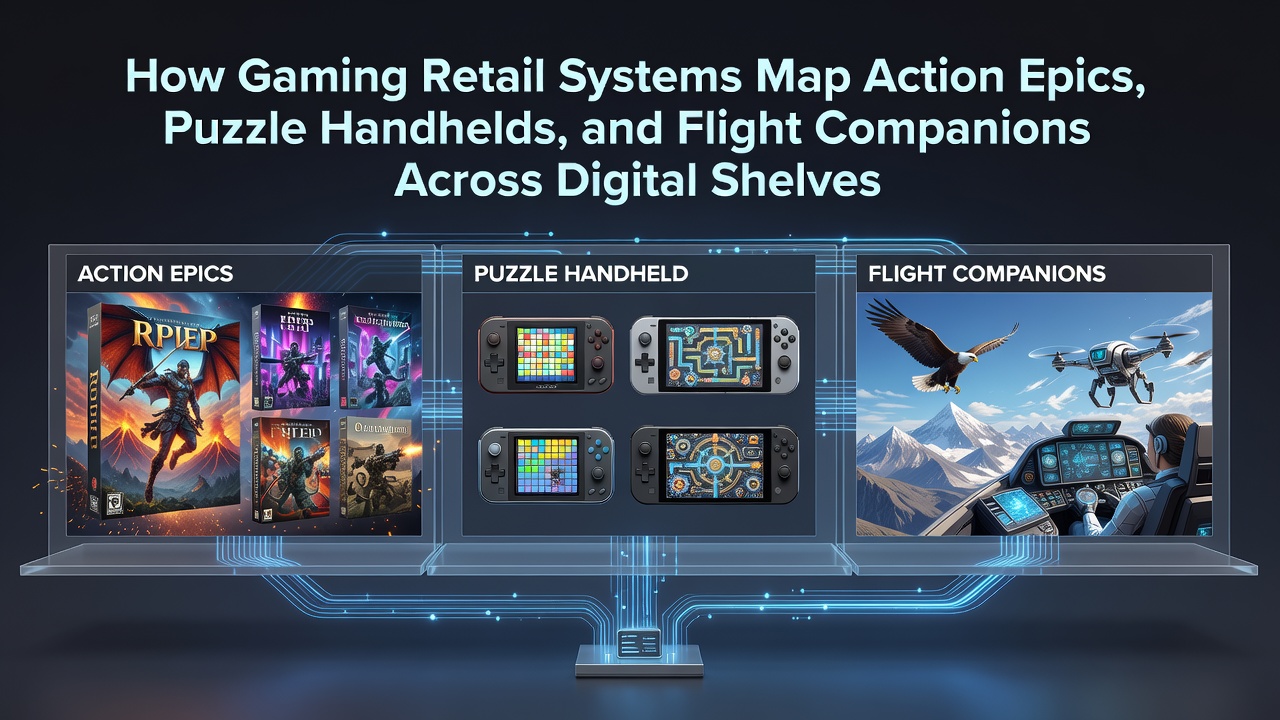
Retail Taxonomy Frameworks: Organizing Action Franchises, Handheld Puzzle Libraries, and Aviation Mounts in Digital Marketplaces
Retail systems in gaming e-commerce rely on structured backend processes to place products such as action epics, puzzle handhelds, and flight companions into consistent categories across digital shelves, adn these mechanisms draw from established data models that track console releases alongside portable accessories. Data from industry reports indicate that platforms integrate franchise-specific tags with broader genre classifications to ensure items like Halo Reach variants appear alongside related Xbox 360 accessories while Nintendo DS puzzle selections link to travel-oriented mounts.
Backend Mapping Processes in Gaming Platforms
Category mapping begins with product ingestion pipelines that assign metadata fields for platform, genre, and accessory type, after which algorithms cross-reference these fields against existing taxonomies to position action epics in high-traffic console sections, puzzle handhelds within portable collections, and flight companions under aviation accessory groupings. Observers note that such systems prevent overlap by enforcing hierarchical rules where primary console titles receive priority placement while companion items receive secondary links that surface during related searches.
Studies from research institutions show that updates to these taxonomies occur quarterly to accommodate new releases, and October 2026 saw several platforms adjust mappings for legacy Xbox 360 titles to maintain visibility alongside emerging handheld puzzle expansions. This adjustment process incorporates input from supplier catalogs that specify compatibility details, ensuring aviation mounts appear in bundles with DS libraries when user data indicates travel-related browsing patterns.
Integration of Action Epics with Broader Console Categories
Action epics such as Halo Reach receive placement through franchise-level nodes that connect to core gaming categories, and these nodes pull from unified databases that track release dates, platform compatibility, and accessory pairings. Retail platforms apply active linking protocols so that selections in one section trigger recommendations in adjacent areas, for instance directing users from Halo Reach pages toward compatible Xbox 360 controllers or aviation stands when bundle logic activates.
Figures from the Entertainment Software Association reveal steady growth in cross-category recommendations that tie console action titles to portable and travel accessories, while similar patterns appear in reports issued by Statistics Canada on digital retail performance. Platforms achieve this linkage by embedding relational fields that update dynamically as inventory shifts occur across regions.
Handling Puzzle Handhelds and Flight Companions in Parallel Structures
Puzzle handhelds occupy dedicated nodes within portable libraries, where metadata emphasizes compact form factors and genre sub-tags such as logic or adventure, and these nodes connect laterally to aviation mounts through shared accessory flags that identify travel utility. Flight companions, including airplane stands designed for DS units, receive parallel tagging that references portability metrics, allowing the system to surface them in searches that originate from either handheld puzzle selections or broader travel accessory groupings.
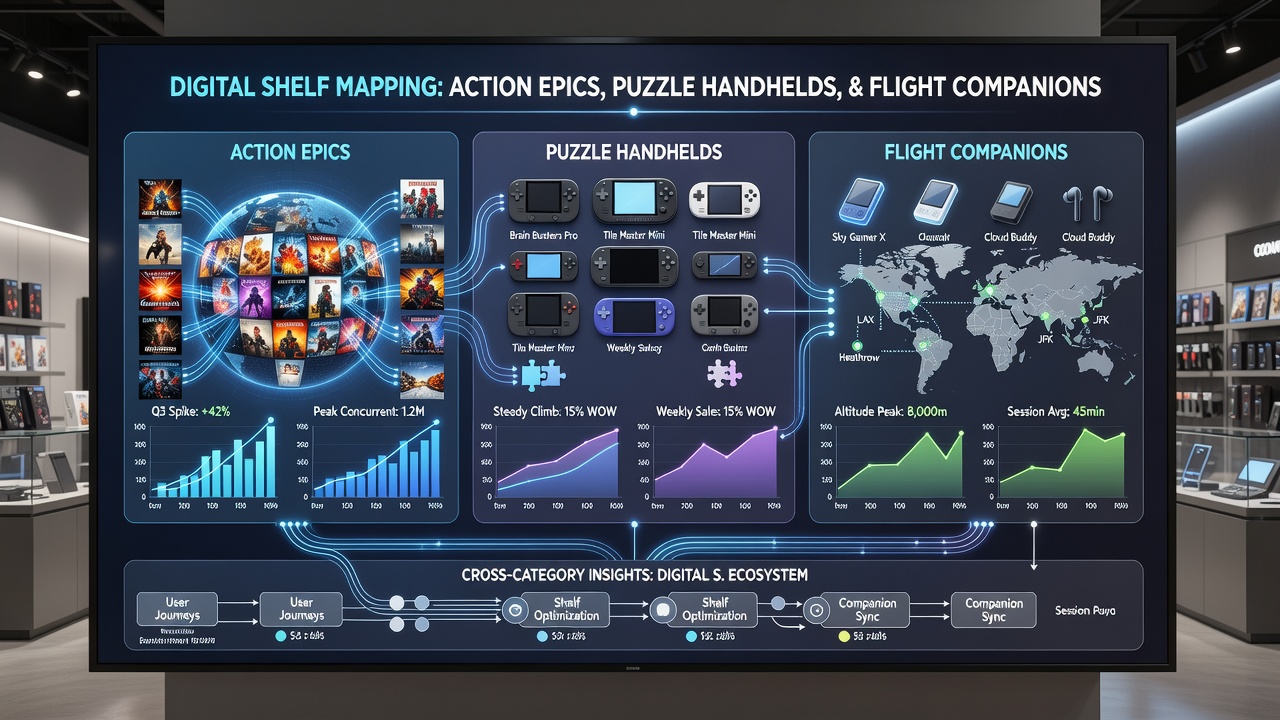
Those who manage these platforms report that relational databases maintain bidirectional references so that updates to one category propagate to linked sections without manual intervention, and this approach reduces duplication while preserving distinct shelf identities. Research published by the University of Melbourne on e-commerce taxonomy indicates that such bidirectional mapping improves retrieval accuracy for niche accessory pairings.
Data Flows Across Digital Storefronts
Information moves through integrated services that standardize product records before distribution to frontend displays, and these services apply validation checks to confirm that action epics retain franchise integrity, puzzle handhelds maintain genre specificity, and flight companions align with aviation classifications. When a new Halo Reach variant enters the system, the pipeline assigns console category tags that simultaneously generate cross-links to compatible mounts, creating a network that users encounter as seamless navigation.
European Commission retail statistics demonstrate that platforms employing unified data flows experience measurable consistency in product visibility across categories, and similar outcomes appear in Australian Bureau of Statistics summaries covering digital goods distribution. These flows rely on API endpoints that exchange metadata in real time, allowing October 2026 platform updates to reflect seasonal demand shifts for portable puzzle items paired with travel accessories.
Conclusion
Retail taxonomy frameworks continue to evolve through iterative refinements that balance franchise-specific organization with cross-category connectivity, and the resulting structures support efficient placement of action epics, puzzle handhelds, and flight companions across digital shelves. Ongoing developments in metadata standards and relational linking maintain the operational integrity of these systems as product ranges expand.